Skip to content

Signals

The elementary signals

Many signals in this course are built from a handful of simple ones. This topic introduces the impulse, the step and the ramp, then the sinusoid with its amplitude, frequency and phase. A lesson on complex numbers prepares the last one, the complex exponential, which describes a sinusoid as a spinning arrow called a phasor.

Lessons on this topic

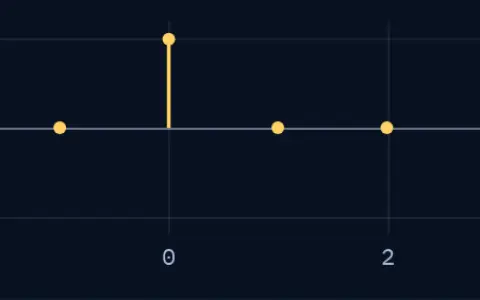
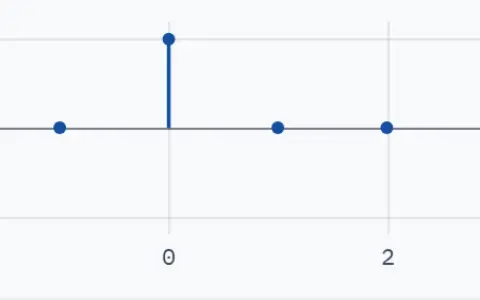
Spike, for n from -3 to 5.Spike, for n from -3 to 5.

Beginner · 18 minYou are hereRead

Impulse, step and ramp

Give the spike and the switch, the building blocks of any signal, their real names, and meet their continuous-time twins.

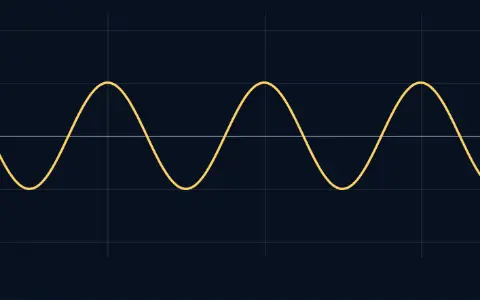
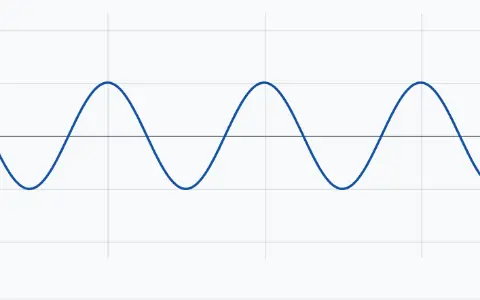
A cosine wave of height 1.00, repeating every 1.00 seconds.A cosine wave of height 1.00, repeating every 1.00 seconds.

Beginner · 20 minYou are hereRead

Sinusoids

Name the smooth repeating wave you met as a pure tone, read off its amplitude, frequency and phase, and meet its sampled, discrete-time twist.

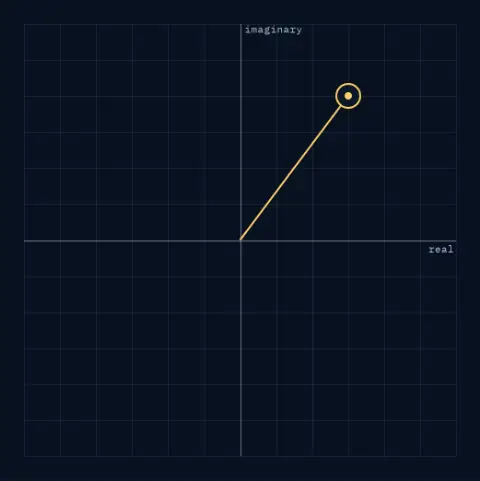
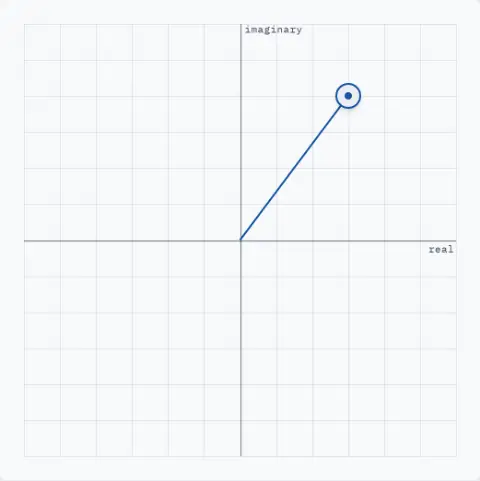
A plane with axes labelled real and imaginary. A point sits at 3.00 across and 4.00 up, written 3.00 + 4.00j.A plane with axes labelled real and imaginary. A point sits at 3.00 across and 4.00 up, written 3.00 + 4.00j.

Beginner · 20 minYou are hereRead

Complex numbers for signals

Build complex numbers from nothing, as points and arrows in a plane, ready to describe a sinusoid as a spinning arrow.

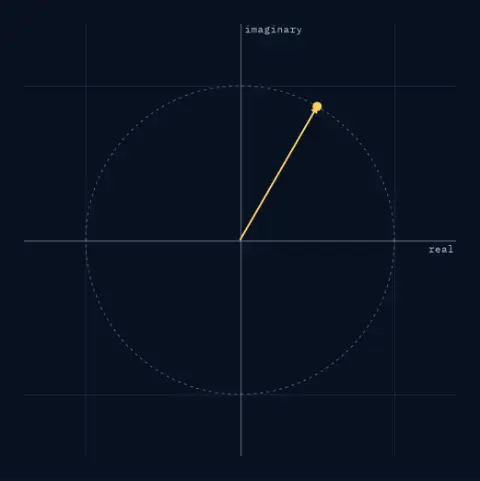
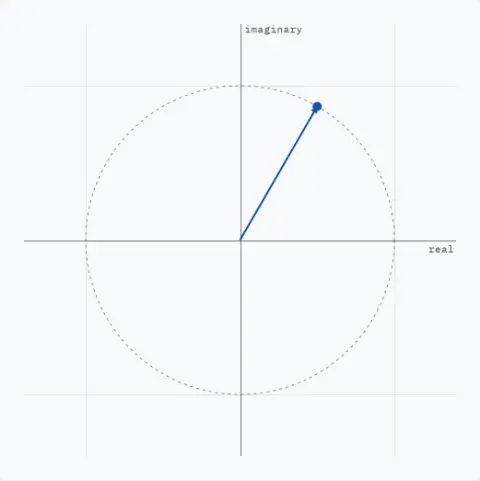
A point on the unit circle at angle 60.0°, at 0.50 + 0.87j.A point on the unit circle at angle 60.0°, at 0.50 + 0.87j.

Beginner · 20 minYou are hereRead

Complex exponentials and phasors

Set a point of the complex plane spinning to meet Euler’s formula, phasors, beats and decaying spirals.

Phasorium

Account

Sign inWith Google, GitHub or your email

Subjects

Site

Look