Skip to content

Orthogonality and determinants

Determinants

The determinant says how much a matrix scales area, or volume in three dimensions, and its sign says whether the picture is flipped. This topic builds that picture first, then computes determinants by elimination, by cofactors and by formula.

Lessons on this topic

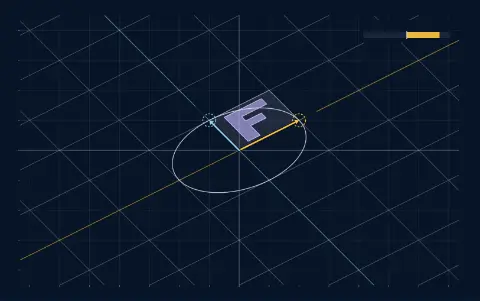
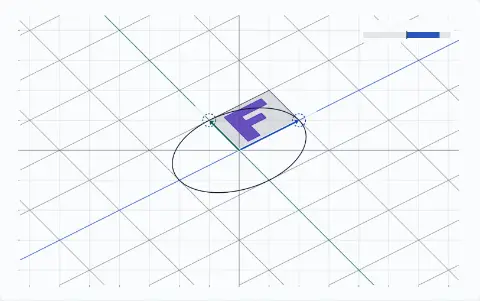
Animation: a square grid and the unit arrows e1 and e2 move from the identity to the matrix with columns (2, 1) and (−1, 1). E1 has landed on (2, 1) and e2 on (−1, 1). Grid lines stay straight, parallel and evenly spaced, and the origin stays put.Animation: a square grid and the unit arrows e1 and e2 move from the identity to the matrix with columns (2, 1) and (−1, 1). E1 has landed on (2, 1) and e2 on (−1, 1). Grid lines stay straight, parallel and evenly spaced, and the origin stays put.

Intermediate · 25 minYou are hereRead

The determinant as area

See a matrix scale every area by one factor, read a minus sign as a flip and zero as flattening, and multiply area factors.

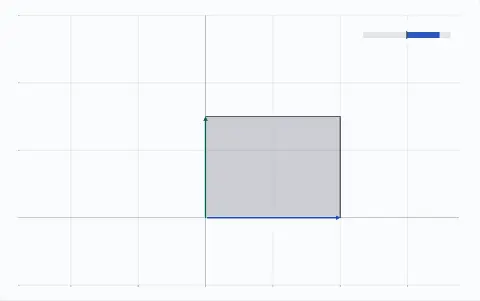
A parallelogram slides into a rectangle by two shears; its columns are now (2, 0) and (0, 1.5). Its signed area is 3.A parallelogram slides into a rectangle by two shears; its columns are now (2, 0) and (0, 1.5). Its signed area is 3.

Intermediate · 30 minYou are hereRead

Computing determinants

Slide a parallelogram into a rectangle without changing its area, read the determinant from the pivots, and see why cofactors are for small matrices only.

Phasorium

Account

Sign inKeep your place on any device

Subjects

Site

Look