Skip to content

Probability

Random processes

A random process is a random quantity that unfolds in time. This topic follows arrivals at random moments, with exponential waiting times, and Markov chains, whose next step depends only on where they are now.

Lessons on this topic

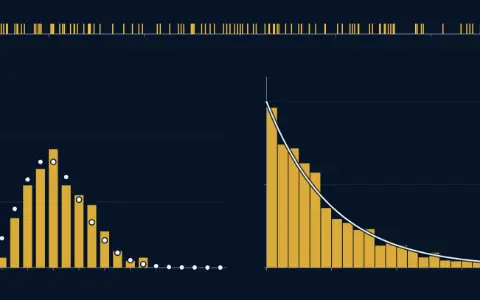
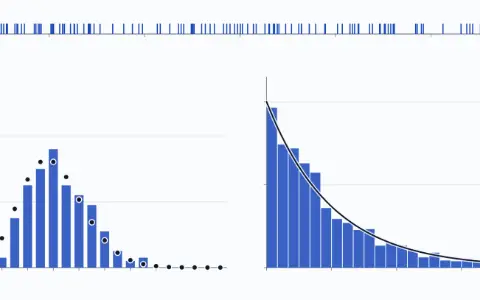
A timeline of the first minute with a tick for each click, at 2.0 clicks a second; 1270 clicks so far. Below, a histogram of the counts in 200 windows of 3 s over dots at the Poisson chances with mean 6.0, and a histogram of the gaps over the curve 2.0e^(−2.0t).A timeline of the first minute with a tick for each click, at 2.0 clicks a second; 1270 clicks so far. Below, a histogram of the counts in 200 windows of 3 s over dots at the Poisson chances with mean 6.0, and a histogram of the gaps over the curve 2.0e^(−2.0t).

Intermediate · 30 minYou are hereRead

Random arrivals

Events that arrive at a steady rate with no memory give counts that follow the Poisson law and gaps that follow the exponential law.

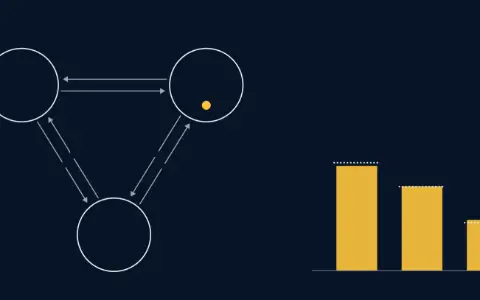
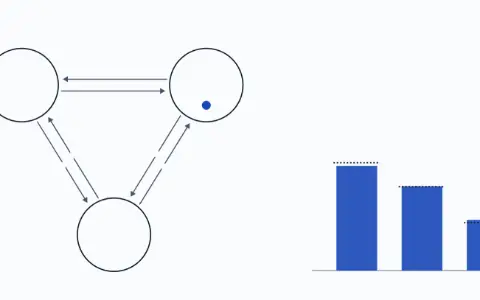
Three states, sunny, cloudy and rainy, as circles with arrows labelled with the chance of each hop. A token sits on cloudy, day 3000. Bars of the share of days so far: sunny 0.437, cloudy 0.352, rainy 0.211, with dotted marks at 0.45, 0.35 and 0.20.Three states, sunny, cloudy and rainy, as circles with arrows labelled with the chance of each hop. A token sits on cloudy, day 3000. Bars of the share of days so far: sunny 0.437, cloudy 0.352, rainy 0.211, with dotted marks at 0.45, 0.35 and 0.20.

Intermediate · 30 minYou are hereRead

Markov chains

A chain that forgets its past is described by one table of hop chances; its long-run share of time in each state ignores the start.

Phasorium

Account

Sign inKeep your place on any device

Subjects

Site

Look